Introduction
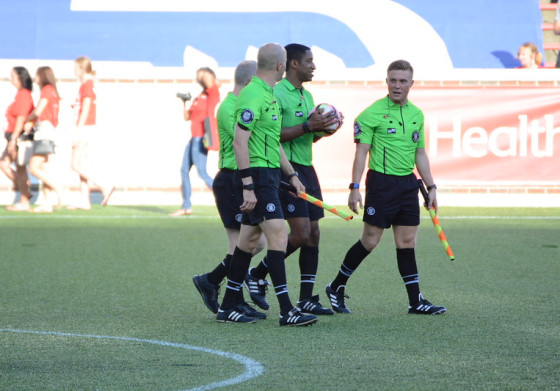
The UEFA Champions League Final is the most scrutinised match in club football — and the referee standing in the centre circle faces a level of pressure few officials will ever experience. But beyond the spotlight and the spectacle, what does the data actually tell us about how referees perform in the biggest game in European club football?
Who Gets the Call?
UEFA\'s appointment process for the Champions League Final is shrouded in careful deliberation. In recent years, the governing body has favoured referees from nations not directly involved in the final, prioritising perceived neutrality. Referees such as Cüneyt Çakır (Turkey), Björn Kuipers (Netherlands), and Szymon Marciniak (Poland) have all taken charge of the showpiece event, each bringing a wealth of top-level experience to the role.
Statistically, the appointed referee almost always ranks among the top performers in UEFA\'s internal evaluation system for that season. This is not coincidence — it is policy. UEFA\'s referee committee typically selects officials who have demonstrated consistent accuracy, composure, and leadership throughout the knockout rounds.

Card Counts: Less Than You Might Expect
One of the more surprising findings when reviewing Champions League Final data is how relatively low the card counts tend to be. Across the last ten finals, the average number of yellow cards issued per match sits at approximately 2.8, noticeably lower than the knockout round average of around 3.5 per game.
- Finals refereed by Marciniak and Kuipers saw just two yellows each.
- Only two finals in the past decade produced a red card.
- The 2019 final between Liverpool and Tottenham, refereed by Damir Skomina, saw just one yellow card — one of the lowest totals on record.
Analysts suggest this reflects both the referee\'s authority and the players\' own awareness of the occasion — few want to miss a final through suspension.
VAR\'s Growing Role
Since its introduction to the competition, the Video Assistant Referee system has featured in every Champions League Final. Data shows that VAR interventions in finals have been minimal but impactful. The 2019 final saw an early VAR-awarded penalty, which fundamentally shaped the contest. Referees must now manage not only the ninety minutes on the pitch but their communication with the VAR team in Nyon.
Under UEFA\'s current protocol, on-field referees retain the final decision-making authority, but the expectation to conduct pitch-side reviews on certain incidents has added a new layer of public accountability to the role.
The Consistency Factor
Perhaps most telling is this: referees appointed to Champions League Finals have, on average, officiated in four or more Champions League matches that same season. Experience within the competition — not just general reputation — appears to be a decisive factor in selection.
As the sport continues to evolve and data analytics play a greater role in referee evaluation, the profile of the ideal Champions League Final referee is becoming clearer. Elite fitness, VAR literacy, and a demonstrably steady card-issuing record are no longer just desirable traits — they are prerequisites.